


For many Muslims, there is a deep, profound longing to connect directly with the words of the Qur’an. We want to open the Mus’haf, read the verses smoothly, and feel the weight of Allah’s Words so it can transform us. Yet, for absolute beginners, taking those first steps can feel very intimidating.
The biggest mistake most beginners make is trying to rush the process – jumping from learning the alphabet straight into reading full verses of the Qur’an. By breaking the journey down into a structured, week-by-week roadmap, accuracy in tajweed becomes completely achievable. Tajweed rules can seem complex at first – like Makharij (articulation points) that refer to where the sounds of letters come from in the mouth and throat, but they are vital in ensuring that you recite the Quran correctly. Sifaat (qualities of the letters) refer to the characteristics that each Arabic letter possesses, such as whether it’s light or heavy, soft or hard.
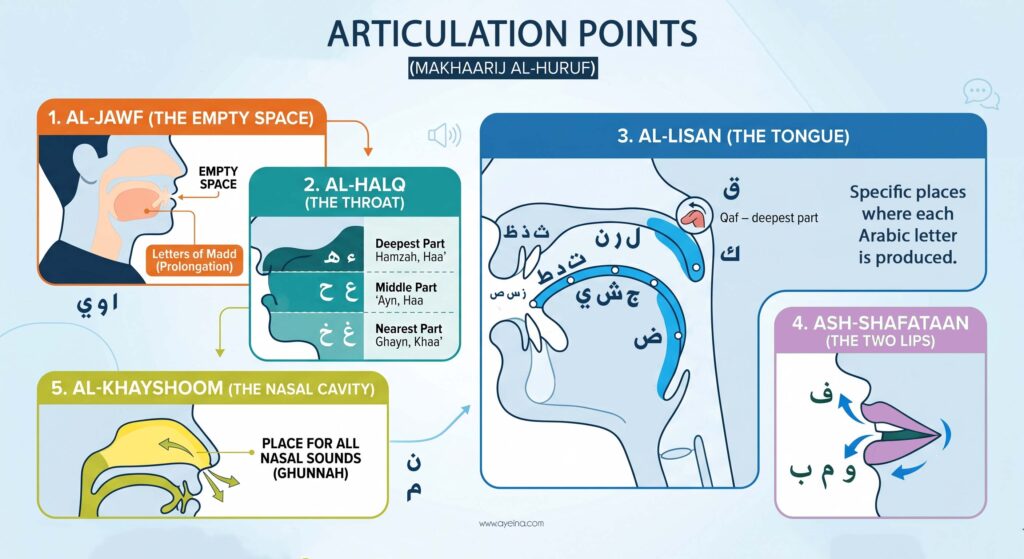
Tajweed (تجويد) comes from the Arabic root jīm wāw dāl (ج و د) which occurs only once in the Quran, as the adjective jiyād (جِيَاد). In Arabic dictionary, it means “to make excellent”. In practice, tajweed is the science of reciting the Quran the way it was revealed, giving every letter its due right. This isn’t just about sounding good. When you change how a letter is pronounced, you can accidentally change the meaning of an entire ayah. The word qalb (قَلْب, heart) becomes kalb (كَلْب, dog) with just a slight shift in where your tongue touches. That’s why scholars consider learning basic tajweed rules an individual obligation (fard al-‘ayn) for every Muslim who recites the Quran in prayer. Allah says in the Quran:
“…recite the Qur’an with measured recitation.” [73:4]
In another translation, it translates as “…recite the Quran as it ought to be recited….”
The phonological window – the developmental period during which the human brain acquires unique foreign sounds with the most ease and accuracy – runs until roughly age twelve. If you are teaching young children, this is their golden window. But if you are an adult, do not be discouraged: your brain retains incredible neuroplasticity. By engaging multiple sensory pathways (auditory, visual, and kinesthetic) over a dedicated 14-week block, anyone can master these sounds in shaa Allah!
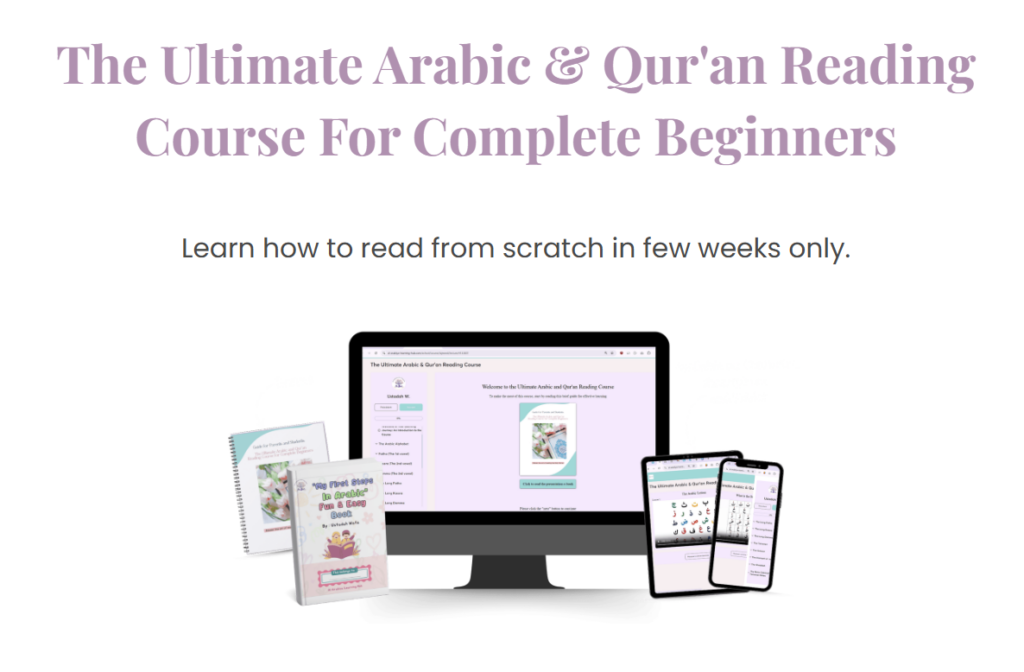
This framework is directly aligned with the curriculum designed by Al-Arabiya Learning Hub through their thorough and structured “The Ultimate Arabic & Qur’an Reading Course” that ensures a solid foundation for you in shaa Allah.
Week 1: The Arabic Alphabet
Your journey begins with mastering the 28 letters of the Arabic alphabet. Because Arabic is a fluid, connected script, you cannot just learn a letter in isolation. You must learn to recognize each letter in all four of its structural forms:
Isolated, Beginning, Middle, and End.
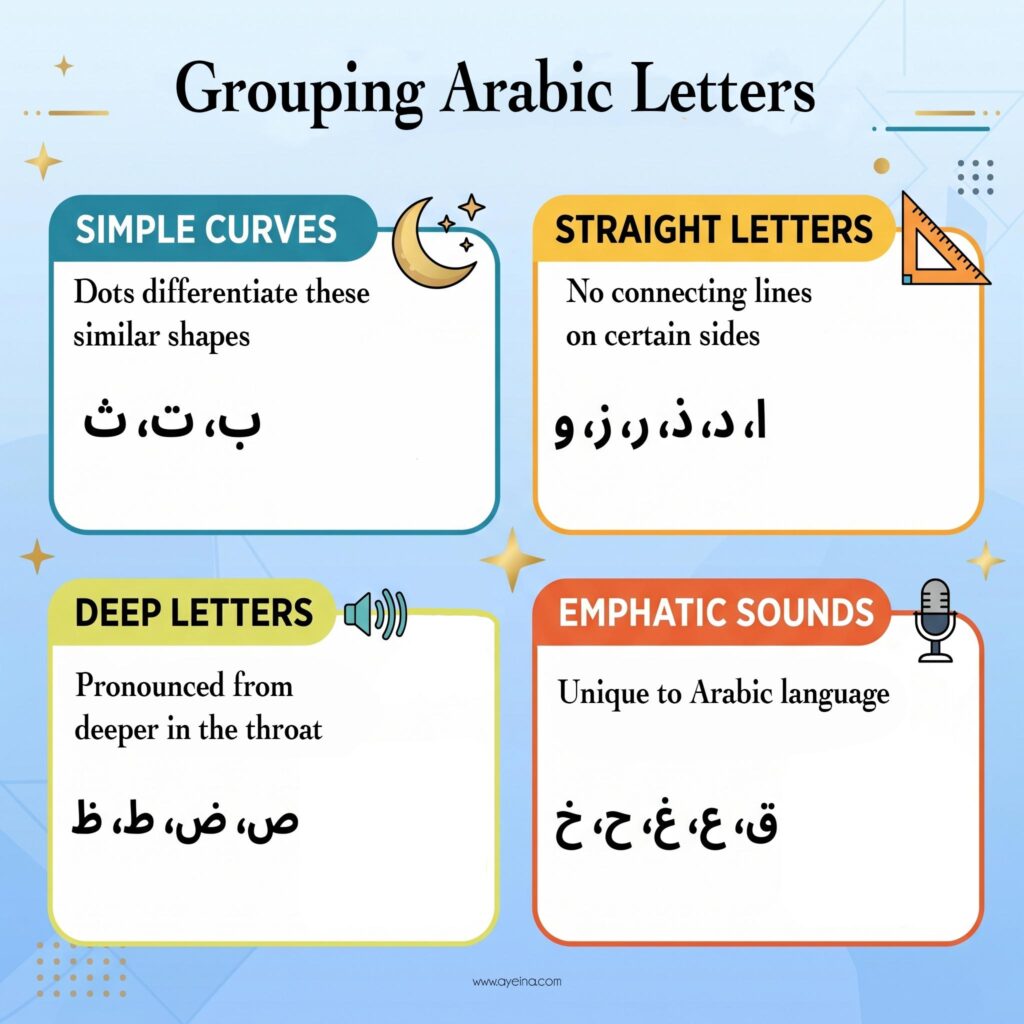
Arabic looks and sounds like no other language. It has sounds that English simply does not replicate because some letters are produced from the deep recesses of the throat, while some are emphatic consonants. If you have ever felt overwhelmed trying to distinguish between letters that sound almost identical but require completely different tongue placements, you are not alone. Arabic is a visually sophisticated language. Its letters change shape, many letters look similar, and words are built from roots and patterns.
Week 1 shortcut:
Group similar-looking letters together (like ب, ت, ث and ج , ح , خ) to spot the subtle differences in dot placements. Use the pdf by Al-Arabiya Learning Hub to trace the letters so you or the child you are teaching can form a visual and muscle memory. My First Steps in Arabic e-book is an easy, fun, and visual guide packed with targeted reading exercises.
Week 2: Harakaat – Fatha
Arabic letters are just like a body without soul while harakaat are the breath that brings the body to life. In week 2, you can start with the first short vowel, the Fatha (فتحة), which sits as a small diagonal line above a letter to create a short “a” sound.
Week 2 shortcut:
Take the quiz by Al-Arabiya Learning Hub to progress systematically from pronouncing the Fatha with single letters, to blending 2-letter words, and finally reading simple 3-letter words smoothly.
Week 3: Harakaat – Kasra
In week 3, you can practice the second short vowel, the Kasra (كسرة), which sits beneath the letter to produce a short “i” sound.
Week 3 shortcut:
Watch the complete set of videos by Al-Arabiya Learning Hub to train your eye and mouth to transition smoothly between a Fatha (up) and a Kasra (down) within the same 2-letter and 3-letter words.
Week 4: Harakaat – Damma
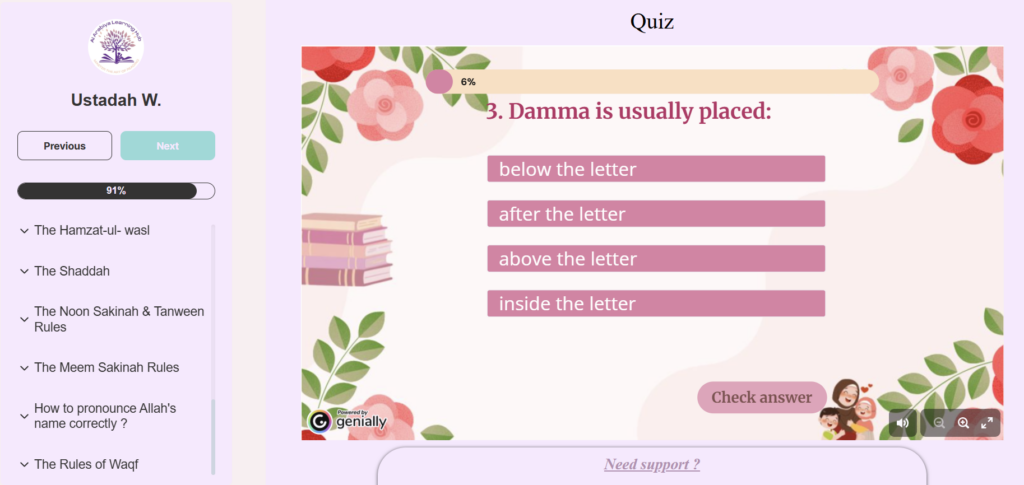
You wrap up the short vowels by mastering the Damma (ضمة), a tiny comma-shaped mark above the letter making a short “u” sound.
Week 4 shortcut:
Take the quiz by Al-Arabiya Learning Hub to ensure you catch pronunciation or recognition errors instantly before moving on to complex rules. At this stage, prioritize accuracy over speed.
Week 5: Learning to Stretch – The Long Fatha
Once short vowels are locked in, you must learn to elongate them. In week 5, focus on the Long Fatha, where a standard Fatha connects with an Alif to stretch the vowel sound.
Week 5 shortcut:
Take the quiz by Al-Arabiya Learning Hub to move step-by-step from stretching 2-letter combinations to reading longer, multisyllabic words without losing your rhythm.
Week 6: Expanding Elongation – The Long Kasra
Building on the concept of stretching, you will master the Long Kasra (paired with the letter Ya).
Week 6 shortcut:
Seek support from Ustadah Wafa on Telegram to identify other essential types of elongation (Madd) that are required to preserve the correct, sacred meanings of Quranic words.
Week 7: The Long Damma
Building on the concept of stretching, you will master the Long Damma (paired with the letter Waw).
Week 7 shortcut:
Take the quiz by Al-Arabiya Learning Hub to progress and test your knowledge. You can also seek support from Ustadah Wafa on Telegram.
Week 8: The Double Vowels – The Tanween
This week introduces the Tanween (تنوين), which represents double vowels (Double Fatha, Double Kasra, and Double Damma).
Week 8 shortcut:
Take the quiz by Al-Arabiya Learning Hub to learn how to add a clean, distinct “n” sound to the end of words, which is a major stepping stone toward advanced Quranic grammar.
Week 9: Silence & the Echo – Sukoon & The Qalqalah Mechanism
Week 8 shifts to the Sukoon (سكون), a small circle above a letter indicating the absolute absence of a vowel, resting the voice entirely on that consonant.
Week 9 shortcut:
Take the quiz by Al-Arabiya Learning Hub to master the Sukoon in long words and introducing the Qalqalah mechanism – the precise bouncing or echoing sound required when stopping on specific resting letters ق ط ب ج د .
Week 10: The Connecting Vowel – Hamzat-ul-Wasl
Quranic reading requires knowing how words flow into one another across verses. This week uncovers the rules of Hamzat-ul-Wasl (همزة الوصل).
Week 10 shortcut:
Take the quiz by Al-Arabiya Learning Hub to learn when to pronounce this connecting vowel (such as at the beginning of a verse or when followed by the Lam “AL”) and when to bypass it silently in the middle of a phrase.
Week 11: Doubling the Consonants – The Shaddah
The Shaddah (شدة) looks like a tiny “w” above a letter and indicates a doubled consonant, requiring you to hold the weight of the letter for an extra beat before releasing it.
Week 11 shortcut:
Take the quiz by Al-Arabiya Learning Hub to practice the Shaddah in short words, scaling up to longer words, and finally applying it within short sentences. You can also seek support from Ustadah Wafa on Telegram.
Week 12: Foundational Tajweed – The Rules of Noon Sakinah & Tanween
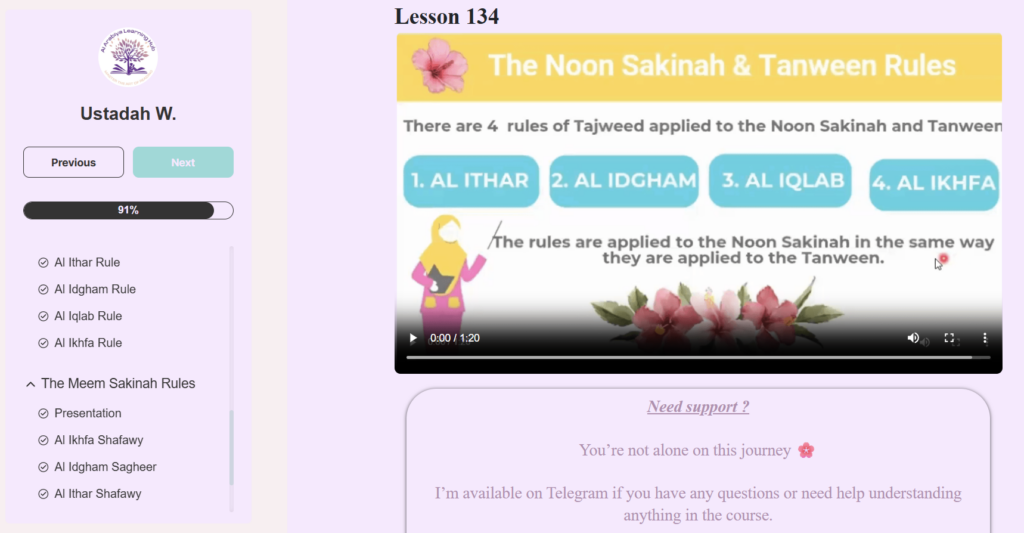
Now that you can read fluidly, you begin the beautiful science of Tajweed (proper recitation rules). For eg: it is called Izhar (الإظهار) – “Clear Pronunciation” when noon sakinah or tanween is followed by one of the six throat letters (ء هـ ع ح غ خ) – this rule means that you will pronounce the noon clearly and fully without merging. Whereas Idgham (الإدغام) – “Merging” means that when noon sakinah or tanween is followed by one of six letters (ي ر م ل و ن, remembered as يَرْمَلُونَ), the noon merges into the next letter. It’s like the noon disappears and gets absorbed. There are also rules like Iqlab (الإقلاب) – “Conversion” which is applied when noon sakinah or tanween comes before ب (ba), and the noon is converted into a م (meem) sound, held with a nasal hum for 2 counts. And Ikhfa (الإخفاء) – “Concealment” which is for the remaining 15 letters of the Arabic alphabet (ت ث ج د ذ ز س ش ص ض ط ظ ف ق ك) where the noon sakinah or tanween is partially hidden. It’s not fully pronounced like izhar, and it’s not fully merged like idgham. It is somewhere in between, with a nasal hum for 2 counts.
Week 12 shortcut:
Take the quiz by Al-Arabiya Learning Hub to master the four pillars of this rule: Al Izhar (clarity), Al Idgham (merging), Al Iqlab (conversion), and Al Ikhfa (concealment).
Week 13: Advanced Tajweed – The Rules of Meem Saakinah
Similar to the previous week, this module covers the rules surrounding a resting Meem consonant.
Week 13 shortcut:
Take the quiz by Al-Arabiya Learning Hub to memorise and practice Al Ikhfa Shafawy, Al Idgham Sagheer, and Al Ithar Shafawy to give your recitation a professional, melodious flow like that of the famous reciters.
Week 14: Master the Pause – The Rules of Waqf
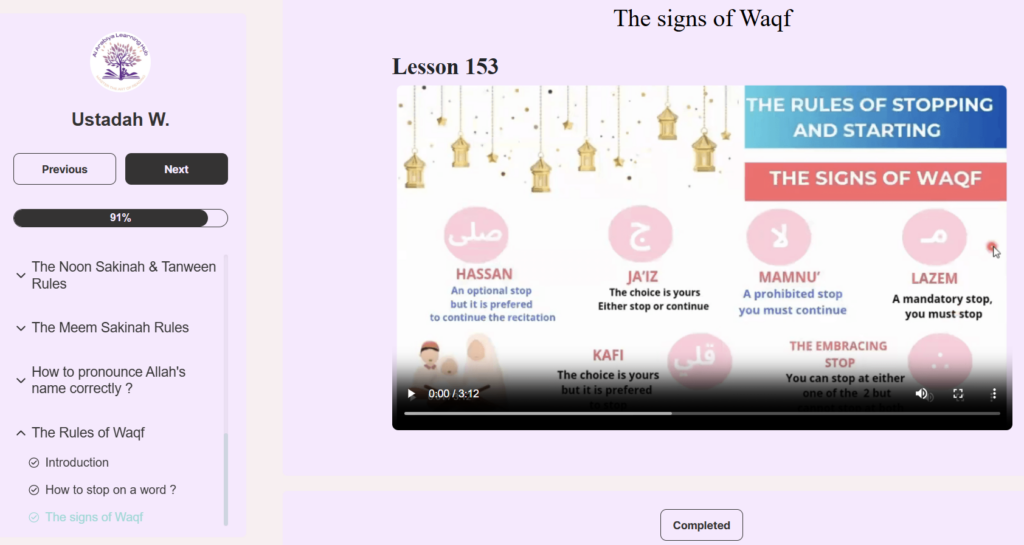
Your final week focuses on Waqf (Stopping). You cannot read a long Quranic verse in a single breath, so you must learn where and how to stop.
Week 14 shortcut:
Take the quiz by Al-Arabiya Learning Hub to learn how to safely drop the final vowel of a word when stopping, and decoding the various stopping signs (like ۚ or ۗ ) printed inside the Mushaf.
BONUS: Pronouncing Allah’s Name Correctly
The word “Allah” has specific, unique linguistic rulings in the Quran depending on the vowel that precedes it. Learn when to pronounce the name of Allah with a heavy, thick tone (Tafkheem) and when to keep it light and thin (Tarqeeq). You can also seek support from Ustadah Wafa on Telegram for further clarification or additional help with any of the lessons.
No matter how great a blueprint is, your daily habits determine your success. Keep these three core principles in your routine as you move through the 14 weeks:
1. Believe in yourself and put your trust in Allah
Anas bin Malik narrated that a man said: “O Messenger of Allah! Shall I tie it (the camel) and rely (upon Allah), or leave it loose and rely (upon Allah)?” He said: “Tie it and rely (upon Allah).” [Jami` at-Tirmidhi 2517]
2. Use the “3-2-1 Method”
Knowledge fades fast without intentional review. Set aside a fixed block of time each week (such as 20 minutes every Friday) to review past material. Go back to older lessons, re-read earlier sentences, and focus your energy heavily on your weak areas.
Borrowed from traditional, highly effective Al-Azhar preschool frameworks, this tactile approach works brilliantly for both children and adults to lock in correct pronunciation:
* 3 correct repetitions mirroring a qualified teacher (this means that you will repeat after teacher Wafa in the videos).
* 2 independent self-corrections without looking at prompts (you will test yourself by muting the audio and then taking the quiz).
* 1 creative application (such as writing the new word by hand in a dedicated study notebook).
3. Teach What You Learn
The absolute best way to retain a linguistic rule is to explain it to someone else. Teach a family member, a friend, or your child and if you are using this course to teach your child, then let them explain it to you or teach their younger sibling or friend.
If you want a streamlined, beautifully structured path that implements this exact 14-week guide from start to finish, the Arabic and Quran Reading Course for Beginners by Al-Arabiya Learning Hub is the ultimate solution. Learning to read the Quran with ease, fluency, and proper Tajweed is a beautiful, life-changing goal.
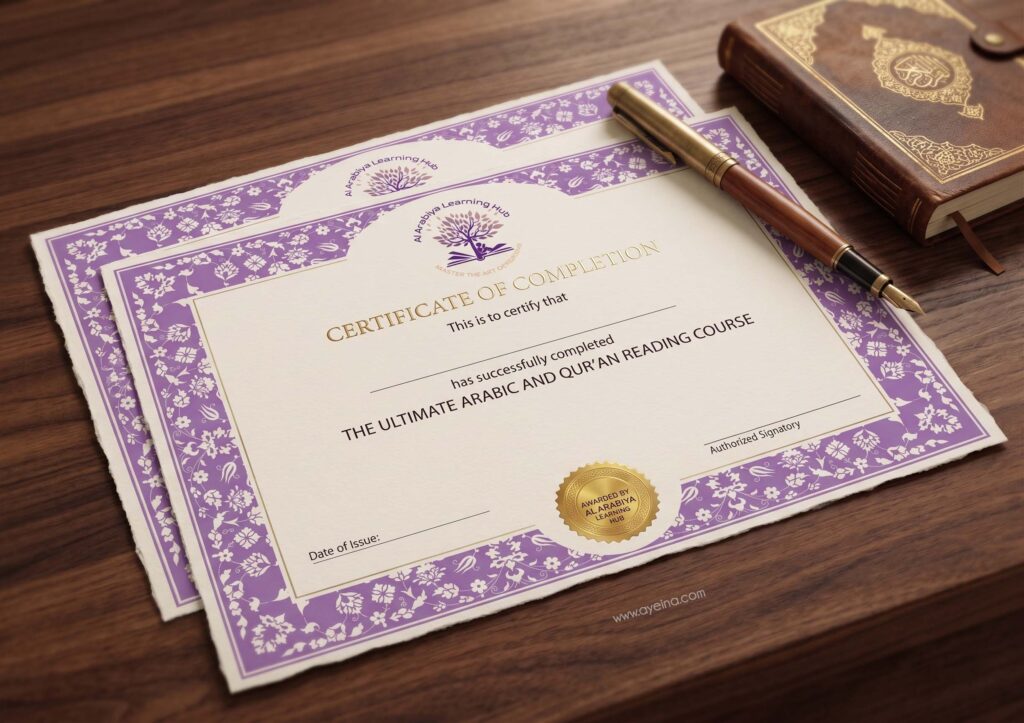
Are you ready to transform your relationship with the book of Allah over the next 14 weeks bi’idhnillah?


![Far Away [Part 23] – Delirium](https://i3.wp.com/c7c8edde.delivery.rocketcdn.me/wp-content/uploads/Far_Away_featured-1000x600.jpg?w=336&resize=336,220&ssl=1)

